A Māori-owned operation that built an industry
Whale Watch Kaikoura is owned by Ngāti Kuri, a hapū of Ngāi Tahu — local Māori families who founded the business in the late 1980s, when Kaikōura was a fishing town with no tourism to speak of. The bet was that the resident sperm whales over the Kaikōura Canyon could carry a visitor economy, and it paid off: the company grew into one of New Zealand’s best-known Māori-owned businesses and turned the town into the country’s whale watching capital. When you ride this boat, that is the story you are stepping into — and the commentary on board carries it, alongside the marine science of the canyon.
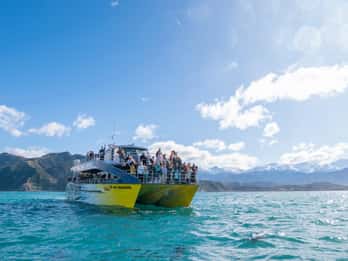
The boats themselves are catamarans fitted with engines designed to keep underwater noise low — part of the operation’s animal-first approach, which one review singles out. The trip runs about 3.5 hours door to door, with a good 2 hours of it on the water, and children can join from age 3, weather permitting.
The seasickness question, answered by the reviews
This stretch of the Pacific sits open to the swell, and the cruise runs on rough-but-sailable days as well as calm ones. Seasickness is the single most common complaint in the boat’s reviews — one recent three-star review from a rough day reports that a noticeable share of passengers on board were sick. The operator does not hide this: the booking page flags it, and remedies are sold at the office before departure.
!
If you know you get seasick, take the reviews seriously.
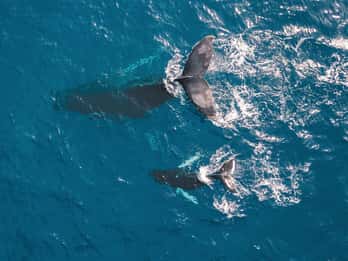
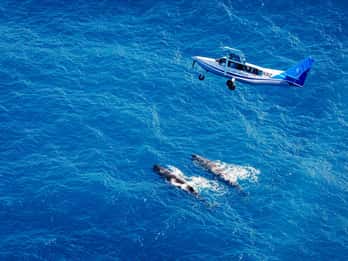
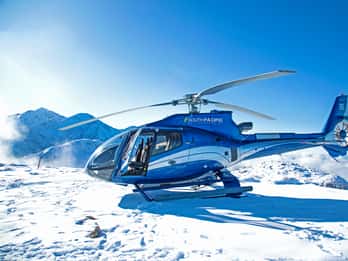
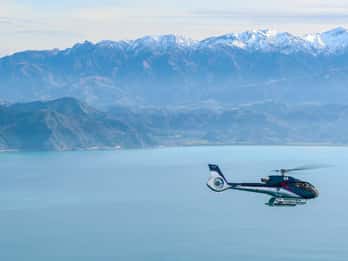
Remedies help many people, and calm days do happen. But the surer fix is a mode that skips the water entirely — the planes and the helicopter show you the same whales with no swell under you. That is not an upsell; it is the direct answer to the most repeated criticism of this trip.
What happens on a lean sighting day
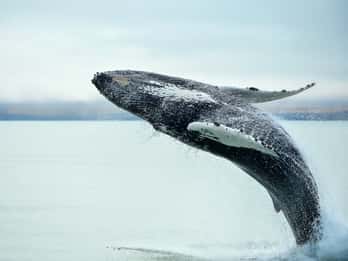
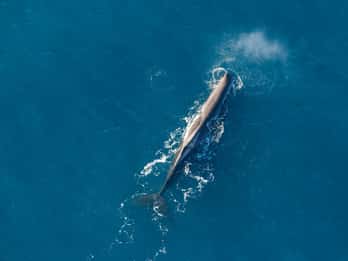
Sightings over a resident sperm whale population are a strong probability, not a promise — and the reviews show both ends of that. Plenty describe breaching whales, dolphins, seals and albatrosses in a single trip. Others describe a whale seen only briefly or from a distance, or a day when mainly dolphins showed up.
On refunds, precision matters. The operator advertises a partial refund when a cruise sees no whale; the binding terms live on its own channels, and that promise belongs to the boat alone — the air operators handle it differently. In practice the reviews sketch the range: one traveller on a quiet day was refunded 40% of the fare as a goodwill gesture, while another who saw only dolphins reports getting no refund. Read the current terms on the product page before you book, and treat anything beyond the stated policy as the operator’s discretion, not an entitlement.
Weather: the other thing you cannot book around
The sea state cancels sailings, and the call can come at short notice — one August review describes catching the only sailing of the day, with everything after it cancelled. Cancellation by the operator means a rebooking or refund, and your own free cancellation runs up to 24 hours before departure. The practical move is the same one we recommend for every Kaikōura trip: book for early in your stay and keep a buffer day, so a cancelled morning can become tomorrow’s cruise — or a flight, which needs different weather than the boat does.
★
In short
Book the cruise if time near the whales is the point: it is the longest trip and the one with the story. Allow for the possibility of a rough ride, know the partial-refund promise is the boat operator’s own claim with its terms on its own channels, and keep a buffer day for the weather.